
Contents
- 🛡️ What is a Denial-of-Service (DoS) Attack?
- 🎯 Types of DoS Attacks You Need to Know
- 📈 The Impact of DoS Attacks on Businesses
- ⚖️ DoS vs. DDoS: Understanding the Difference
- 🛠️ Common Tools and Techniques Used in DoS Attacks
- 🛡️ Defending Your Network Against DoS Attacks
- 🚨 Legal Ramifications of Launching DoS Attacks
- 💡 Best Practices for Mitigating DoS Threats
- Frequently Asked Questions
- Related Topics
Overview
A Denial-of-Service (DoS) attack is a malicious attempt to disrupt the normal functioning of a network, server, or website, rendering it inaccessible to its legitimate users. The core objective is not to steal data, but to overwhelm the target system with an excessive volume of traffic or malformed requests, causing it to crash or become unresponsive. This can range from minor inconveniences to significant financial losses, depending on the target and the duration of the disruption. Understanding the mechanics of these attacks is the first step in effective cybersecurity defense.
🎯 Types of DoS Attacks You Need to Know
DoS attacks manifest in various forms, each exploiting different vulnerabilities. Volumetric attacks aim to saturate the target's bandwidth with massive amounts of traffic, often using botnets. Protocol attacks target weaknesses in network protocols like TCP/IP, consuming server resources by exploiting connection states. Application layer attacks focus on specific applications or services, overwhelming them with seemingly legitimate but resource-intensive requests, such as repeated database queries or complex web page requests. Each type requires a tailored defense strategy.
📈 The Impact of DoS Attacks on Businesses
The impact of a successful DoS attack can be devastating for businesses. Beyond the immediate loss of service, which can halt operations and lead to lost revenue, there are significant reputational damages. Customers lose trust in a service that is frequently unavailable, potentially driving them to competitors. Furthermore, the cost of mitigating an attack, including hiring cybersecurity experts and investing in new defenses, can be substantial. For some businesses, particularly those with a strong online presence, a prolonged DoS attack can be an existential threat.
⚖️ DoS vs. DDoS: Understanding the Difference
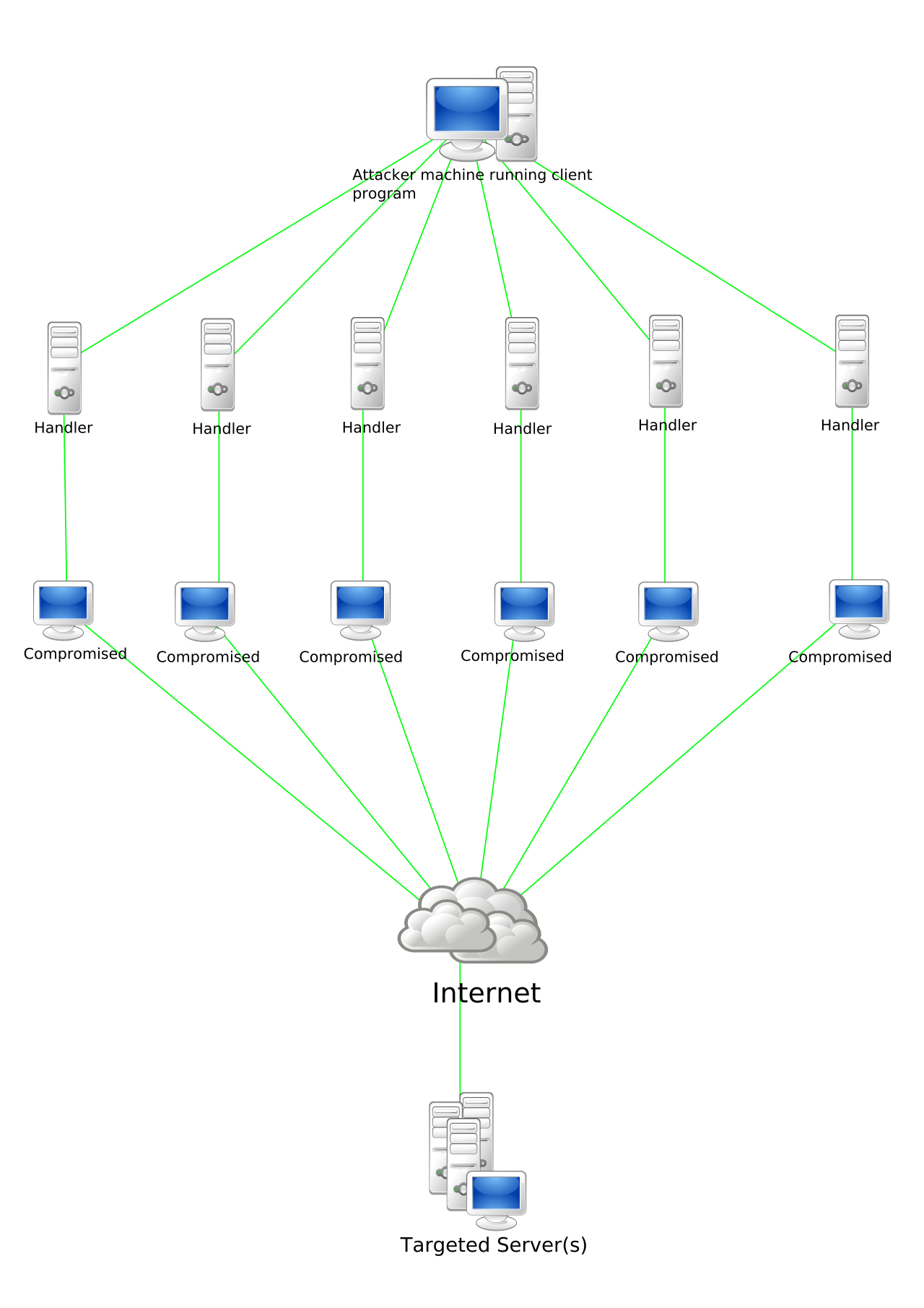
While often used interchangeably, DoS and Distributed Denial-of-Service (DDoS) attacks have a crucial distinction: the source of the attack. A DoS attack typically originates from a single source or a small number of sources. In contrast, a DDoS attack leverages a network of compromised computers, known as a botnet, to launch a coordinated assault from thousands or even millions of IP addresses simultaneously. This distributed nature makes DDoS attacks far more powerful and significantly harder to block than their single-source DoS counterparts.
🛠️ Common Tools and Techniques Used in DoS Attacks
Attackers employ a range of tools and techniques to execute DoS attacks. Simple scripts can be used for basic floods, while more sophisticated attackers utilize specialized software that can automate the process of building botnets or scanning for network vulnerabilities. Botnet-as-a-Service (BaaS) platforms have made it easier for even less technically skilled individuals to launch large-scale attacks. Common techniques include SYN floods, UDP floods, and HTTP floods, each designed to exhaust specific system resources.
🛡️ Defending Your Network Against DoS Attacks
Defending against DoS attacks requires a multi-layered approach. Network infrastructure should be robust, with sufficient bandwidth to handle traffic spikes. Intrusion detection and prevention systems (IDPS) can help identify and block malicious traffic patterns. Implementing rate limiting on servers and applications can prevent a single source from overwhelming resources. For larger-scale threats, specialized DDoS mitigation services are often necessary, which can filter malicious traffic before it reaches the target network.
🚨 Legal Ramifications of Launching DoS Attacks
Launching a Denial-of-Service attack is a serious criminal offense in most jurisdictions. In the United States, for example, the Computer Fraud and Abuse Act (CFAA) prohibits unauthorized access to computer systems and networks, which includes disrupting their availability. Convictions can result in significant fines and lengthy prison sentences. The Cybercrime Act in the UK and similar legislation globally underscore the severe legal consequences for perpetrators, aiming to deter such disruptive activities.
💡 Best Practices for Mitigating DoS Threats
To effectively mitigate DoS threats, businesses should adopt proactive strategies. Regularly update and patch all software and network devices to close known vulnerabilities. Implement strong firewall configurations and access controls. Develop a comprehensive incident response plan that outlines steps to take during an attack, including communication protocols and escalation procedures. Consider employing Content Delivery Networks (CDNs) which can absorb large traffic volumes and distribute requests across multiple servers, making them more resilient to attacks.
Key Facts
- Year
- 1990
- Origin
- The concept of DoS attacks emerged in the early 1990s, with early notable incidents targeting systems like the University of Minnesota's network in 1997 and later, more famously, the distributed denial of service (DDoS) attack against Yahoo! in 2000.
- Category
- Cybersecurity
- Type
- Concept
Frequently Asked Questions
What is the primary goal of a DoS attack?
The primary goal of a Denial-of-Service (DoS) attack is to make a network resource, such as a website or server, unavailable to its intended users. This is achieved by overwhelming the target system with excessive traffic or malformed requests, causing it to slow down, crash, or become unresponsive, thereby disrupting legitimate services.
How can I tell if my network is under a DoS attack?
Signs of a DoS attack include a sudden and drastic slowdown in network performance, complete unavailability of websites or online services, an unusually high volume of network traffic, and a surge in requests from unexpected or suspicious IP addresses. Monitoring network traffic patterns and system resource utilization is key to early detection.
Are DoS attacks always carried out by sophisticated hackers?
Not necessarily. While sophisticated attackers use advanced tools and botnets for large-scale attacks, simpler DoS attacks can be launched with readily available software or even basic scripts. The rise of Botnet-as-a-Service (BaaS) has also lowered the technical barrier for entry, making DoS attacks accessible to a wider range of malicious actors.
What is the difference between DoS and DDoS?
The main difference lies in the source of the attack. A DoS attack typically originates from a single computer or a limited number of sources. A Distributed Denial-of-Service (DDoS) attack, on the other hand, uses a vast network of compromised computers (a botnet) to launch a coordinated attack from numerous sources simultaneously, making it much more powerful and difficult to mitigate.
Can I completely prevent DoS attacks?
While complete prevention is extremely difficult due to the nature of internet traffic, robust defense mechanisms can significantly mitigate the impact and likelihood of a successful attack. Implementing a layered security approach, including firewalls, Intrusion Detection Systems (IDS), rate limiting, and specialized DDoS mitigation services, is crucial for minimizing exposure.
What are the legal consequences of launching a DoS attack?
Launching a DoS attack is illegal in most countries and carries severe penalties. Depending on the jurisdiction, perpetrators can face substantial fines, imprisonment, and a criminal record. Laws like the Computer Fraud and Abuse Act (CFAA) in the US specifically target such cybercrimes.