
Contents
Overview
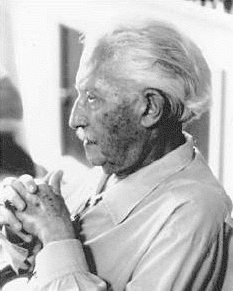
Erik Homburger Erikson's journey began as Erik Salomonsen in Frankfurt, Germany, on June 15, 1902. His early life was marked by uncertainty; his biological father, a Danish man, left before his birth, and his mother later married a pediatrician, Theodor Homburger, who adopted him. This early experience of not knowing his true paternal heritage may have subtly influenced his later focus on identity. After struggling to find a definitive career path, he trained as an artist and teacher in Europe before immigrating to the United States. His initial work in child analysis in Vienna, under the tutelage of figures like Anna Freud, provided the foundation for his unique approach to developmental psychology, which diverged from Sigmund Freud's more biologically deterministic views by incorporating social and cultural factors.
⚙️ How It Works
Erikson's theory of psychosocial development posits that personality develops in a predetermined order through eight stages, from infancy to adulthood. Each stage is characterized by a psychosocial crisis that must be resolved for healthy development. For example, infancy involves the crisis of 'Trust vs. Mistrust,' while adolescence centers on 'Identity vs. Role Confusion.' Successfully navigating these crises leads to the development of specific ego strengths or virtues, such as 'Hope' in infancy or 'Fidelity' in adolescence. Unlike Freudian theory, which focused heavily on early childhood and psychosexual stages, Erikson's model extends throughout the entire lifespan, acknowledging that development and the formation of identity are ongoing processes influenced by social interactions and cultural contexts. His concept of the 'identity crisis' specifically refers to the adolescent's struggle to form a coherent sense of self, integrating past experiences with future aspirations.
📊 Key Facts & Numbers
Erikson's work is cited in over 100,000 academic papers, underscoring its profound impact. His seminal book, 'Childhood and Society,' first published in 1950, has seen multiple editions and sold hundreds of thousands of copies globally. A 2002 survey in the 'Review of General Psychology' ranked him as the 12th most eminent psychologist of the 20th century, a remarkable feat for someone without a traditional academic degree. His theory encompasses eight distinct stages, each representing a critical developmental challenge. The concept of 'identity crisis' has become so pervasive that it's estimated to appear in millions of online articles and discussions annually, demonstrating its cultural penetration. His influence extends to fields beyond psychology, impacting sociology and education.
👥 Key People & Organizations
Key figures in Erikson's intellectual orbit include his wife, Joan Erikson, who collaborated on and expanded his work, particularly on the later stages of life. His mentor, Anna Freud, provided early psychoanalytic training. He held academic positions at Harvard University, Yale University, and UC Berkeley, influencing generations of students. His son, Kai T. Erikson, also became a prominent sociologist. Organizations like the American Psychoanalytic Association have recognized his contributions, though his unique, non-traditional path to eminence set him apart from many of his contemporaries within more rigid academic structures. His work also drew inspiration from anthropologists like Margaret Mead, whose cross-cultural studies informed his understanding of societal influences on development.
🌍 Cultural Impact & Influence
Erikson's concept of the 'identity crisis' has become a cornerstone of popular understanding of adolescence, frequently referenced in media, literature, and self-help literature. His eight-stage model provides a widely accessible framework for understanding human development across the lifespan, influencing parenting advice, educational philosophies, and therapeutic approaches. The idea that individuals grapple with fundamental psychosocial challenges at different life stages has resonated deeply, offering a more optimistic and continuous view of personal growth compared to earlier psychoanalytic theories. His work on childhood development and the formation of a 'healthy personality' has shaped how societies view the journey from infancy to old age, impacting everything from curriculum design in schools to retirement planning.
⚡ Current State & Latest Developments
While Erikson's core theories were developed mid-20th century, their principles remain highly relevant in the 21st century. Developmental psychologists continue to test, refine, and apply his stage model to contemporary issues, such as the impact of social media on adolescent identity formation and the challenges of navigating career changes in a rapidly evolving job market. Researchers are exploring how cultural shifts, globalization, and technological advancements might alter the nature or timing of the psychosocial crises he outlined. For instance, the 'digital identity' phenomenon presents new dimensions to the 'Identity vs. Role Confusion' stage. Furthermore, his emphasis on the later stages of life, particularly 'Integrity vs. Despair,' has gained renewed attention as global populations age, prompting further study into the psychological well-being of older adults.
🤔 Controversies & Debates
A primary controversy surrounding Erikson's work is its perceived lack of empirical testability, particularly the abstract nature of 'psychosocial crises' and 'ego strengths.' Critics, especially those from more behaviorist or cognitive psychology backgrounds, have questioned the scientific rigor of his qualitative descriptions. Furthermore, his original model has been critiqued for being Eurocentric and potentially reflecting a Western bias in its definition of a 'healthy' identity and successful development, particularly regarding gender roles and the emphasis on individualistic achievement. While he incorporated cultural observations, the universality of his stages across vastly different societies remains a point of debate. Some scholars also argue that his focus on distinct stages might oversimplify the fluid and interconnected nature of human development.
🔮 Future Outlook & Predictions
The future of Erikson's theories likely lies in their integration with contemporary research methodologies and evolving societal contexts. Neuroscientific advancements may offer new ways to empirically investigate the brain mechanisms underlying the psychosocial crises he described. As globalization continues, cross-cultural studies will be crucial to determine the universality or cultural specificity of his stages. There's also potential for adapting his model to understand new developmental challenges arising from artificial intelligence, virtual realities, and changing family structures. The ongoing exploration of adult development and the psychology of aging will likely continue to draw heavily on his insights into the later life stages, potentially leading to new frameworks for successful aging and life review. The debate over the empirical validity of his stages versus their heuristic value will undoubtedly persist.
💡 Practical Applications
Erikson's stages offer a practical roadmap for understanding and supporting human development across the lifespan. In education, his model informs curriculum design, helping educators tailor approaches to the specific psychosocial needs of students at different ages, from fostering trust in early childhood classrooms to guiding adolescents through identity exploration. Therapists utilize his framework to assess developmental progress and identify potential areas of conflict or stagnation, aiding clients in resolving 'identity crises' or achieving 'integrity' in later life. Parenting guides often reference his stages to help parents understand their child's developmental tasks and challenges, promoting age-appropriate support. For example, understanding 'Initiative vs. Guilt' helps parents encourage exploration without excessive restriction. His work also provides a lens for understanding career development and life transitions, assisting individuals in navigating the psychosocial tasks associated with each phase.
Key Facts
- Category
- philosophy
- Type
- topic