
Contents
Overview
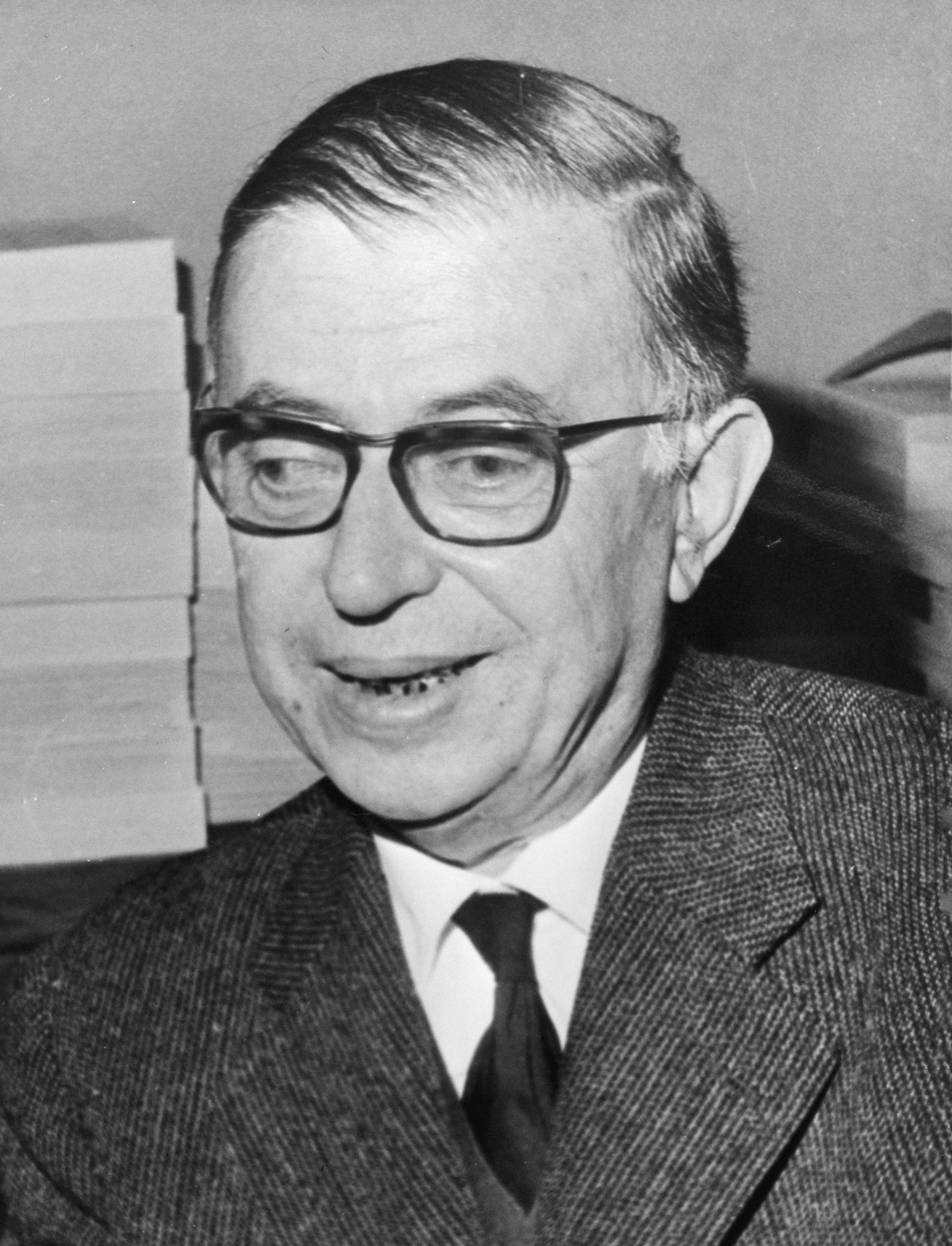
Jean-Paul Sartre (1905-1980) was a towering figure of 20th-century French thought, a philosopher, playwright, novelist, and political activist whose work defined existentialism for a generation. His core tenet, 'existence precedes essence,' posited that humans are born without inherent purpose and must forge their own meaning through radical freedom and choice. Sartre's prolific output, including seminal works like Being and Nothingness and No Exit, explored themes of consciousness, responsibility, and the anguish of choice in a meaningless universe. He was a public intellectual who engaged fiercely with political events, notably his support for marxism and his critiques of colonialism, often aligning himself with radical causes. Despite being awarded the Nobel Prize in Literature in 1964, he famously refused it, embodying his lifelong commitment to intellectual independence and rejection of institutionalization. His influence extends far beyond philosophy, shaping literary criticism, theatre, and political discourse worldwide.
🎵 Origins & History
Jean-Paul Sartre's intellectual journey began in Paris, France, where he was born. His early life was marked by the loss of his father, Jean-Baptiste Sartre, at a young age, leading to his upbringing by his mother, Anne-Marie Schweitzer, and maternal grandfather. He received a rigorous education at prestigious institutions like the École Normale Supérieure, where he met his lifelong intellectual and romantic partner, Simone de Beauvoir. Their shared commitment to challenging bourgeois conventions and exploring radical philosophical ideas would define their intertwined careers. Sartre's early philosophical development was significantly shaped by phenomenological thought, particularly the work of Edmund Husserl and Martin Heidegger, though he would later diverge from and critique their approaches. His experiences during World War II, including his time as a prisoner of war, profoundly influenced his later writings on freedom, responsibility, and resistance.
⚙️ The Core Tenets of Existentialism
At the heart of Sartre's philosophy lies the assertion that 'existence precedes essence.' This means that humans are not born with a predetermined nature or purpose; rather, they are thrown into existence and must define themselves through their choices and actions. This radical freedom, however, comes with profound responsibility and the potential for 'anguish' – the weight of knowing that every choice we make not only defines us but also, in a sense, posits an image of humanity. Sartre explored concepts like 'bad faith' (mauvaise foi), where individuals deny their freedom and responsibility by conforming to societal roles or blaming external factors. His magnum opus, Being and Nothingness, delves into the nature of consciousness, freedom, and the 'for-itself' (pour-soi) – the conscious being – in contrast to the 'in-itself' (en-soi) – inert objects. The famous play No Exit encapsulates this with the chilling line, 'Hell is other people,' illustrating how our self-perception is often shaped and distorted by the gaze of others.
📊 Key Facts & Numbers
Sartre's prolific career produced a vast body of work, including major philosophical texts, plays, and numerous novels and essays. His most influential philosophical work, Being and Nothingness, is a dense exploration of existentialist phenomenology. He was awarded the Nobel Prize in Literature in 1964 for his 'richness of ideas, wealth of imagination and penetrating spirit,' though he declined the prize, stating he 'always declined official honors' and that a writer should not become an institution. By the time of his death, an estimated 50,000 people lined the streets of Paris for his funeral, a testament to his immense cultural and intellectual impact. His collected works fill over 2,000 pages in the Gallimard Pléiade edition, showcasing the sheer volume of his output.
👥 Key Figures & Collaborators
Beyond his intellectual partnership with Simone de Beauvoir, Sartre collaborated with and influenced a generation of thinkers and artists. Maurice Merleau-Ponty, another key figure in phenomenology, was a close associate, though their philosophical paths eventually diverged. Sartre's engagement with marxism led to complex relationships with communist intellectuals and political parties, often marked by both alliance and sharp critique. His literary circle included figures like Albert Camus, though their relationship famously soured over philosophical and political disagreements, particularly concerning the role of art in politics and the nature of rebellion. Sartre also maintained a public intellectual role, engaging in debates and publishing critiques that shaped the discourse of his time, often through his influential journal, Les Temps Modernes.
🌍 Political Activism & Public Life
Sartre was not merely a philosopher confined to academia; he was a fervent political activist who believed intellectuals had a duty to engage with the world. He was a vocal critic of French colonialism, particularly the Algerian War, and actively supported anti-colonial movements. His commitment to socialist ideals and later marxism led him to engage with various political groups, though he often maintained a critical distance, refusing to join the French Communist Party outright due to its perceived subservience to Moscow. During the May 1968 student protests, Sartre, then in his sixties, was arrested for his participation in demonstrations, underscoring his continued commitment to radical action. His public persona as a cigarette-smoking, beret-wearing intellectual became an icon of the post-war French left, embodying a life lived in accordance with his philosophical principles.
⚡ Literary & Philosophical Legacy
Sartre's literary and philosophical legacy is immense and multifaceted. His plays, such as No Exit and The Flies, brought existentialist themes to the stage, challenging audiences with their stark portrayals of human freedom and moral dilemmas. His novels, including Nausea, provided fictional explorations of his philosophical ideas, immersing readers in the subjective experience of existential angst. His philosophical works, particularly Being and Nothingness and Critique of Dialectical Reason, remain foundational texts for existentialist thought and continue to be debated and reinterpreted. The concept of 'authenticity' – living in accordance with one's freely chosen values – remains a powerful ethical imperative derived from his work, influencing fields from psychology to self-help literature. His insistence on the responsibility that accompanies freedom continues to resonate in discussions about individual agency and societal obligation.
🤔 Controversies & Criticisms
Despite his profound influence, Sartre's work has not been without criticism. Some critics, like Albert Camus, argued that Sartre's radical emphasis on freedom could lead to a nihilistic despair and an overestimation of individual agency at the expense of collective action or objective moral frameworks. His later embrace of marxism also drew fire from both the left and the right; some Marxists found his interpretation too individualistic, while anti-communists criticized his perceived leniency towards Soviet policies. Furthermore, the intensely subjective nature of his philosophy has been challenged by those who advocate for more objective or scientific approaches to understanding human behavior. The 'bad faith' concept, while insightful, has also been critiqued for potentially being too broadly applied, leading to a constant state of existential anxiety for the individual.
🔮 Future Relevance
In the 21st century, Sartre's ideas remain remarkably relevant, particularly in an era grappling with information overload, political polarization, and the search for meaning in a secularizing world. His emphasis on individual responsibility and the creation of personal values offers a compelling counterpoint to deterministic or externally imposed narratives. The rise of artificial intelligence and automation also prompts renewed consideration of his ideas on consciousness and freedom: as machines become more capable, what does it mean to be human and to exercise free will? His critiques of societal pressures and the 'gaze of the other' continue to resonate in the age of social media, where curated online personas can obscure authentic selfhood. The ongoing debates surrounding political engagement and the role of intellectuals ensure that Sartre's call to action remains a potent force.
💡 Sartre's Influence on Other Fields
Sartre's impact extends far beyond the confines of academic philosophy. His theatrical innovations, particularly his use of dialogue to expose existential dilemmas, profoundly influenced post-war drama and the Theatre of the Absurd. His novels and essays have shaped literary modernism and continue to be studied in literature programs worldwide. In psychology, his concepts of freedom, responsibility, and authenticity have informed [[existential-psychology|existent
Key Facts
- Category
- philosophy
- Type
- topic