
Contents
Overview
The genesis of Lake Mead is inextricably linked to the ambitious vision of controlling the mighty Colorado River. Authorized by the Colorado River Compact of 1922 and subsequent legislation, the Hoover Dam project, initiated in 1931, was designed not only for flood control and hydroelectric power generation but crucially, to create a massive water storage system. The dam's construction, a Herculean effort involving thousands of workers and immense technological innovation, was completed in 1936. The reservoir, named in honor of Dr. Elwood Mead, commissioner of the Bureau of Reclamation from 1924 to 1936, began to fill in 1935, reaching its then-full capacity in 1941. Its official inception as a fully functioning reservoir is often cited as 1964, marking the completion of the Glen Canyon Dam upstream, which further regulated the river's flow into Mead.
⚙️ How It Works
Lake Mead functions as the primary storage reservoir for the Colorado River Basin, acting as a crucial buffer against the river's natural variability. Water enters the lake primarily from the Colorado River via the Hoover Dam and, to a lesser extent, from the Virgin River. The Bureau of Reclamation manages the dam and reservoir operations, releasing water downstream based on complex allocation agreements and real-time demand. Water is drawn from the lake through intakes that supply the Metropolitan Water District of Southern California, the Arizona Public Service, and the Southern Nevada Water Authority. The elevation of the water surface dictates the operational capacity and the ability to generate hydroelectric power at the Hoover Dam.
📊 Key Facts & Numbers
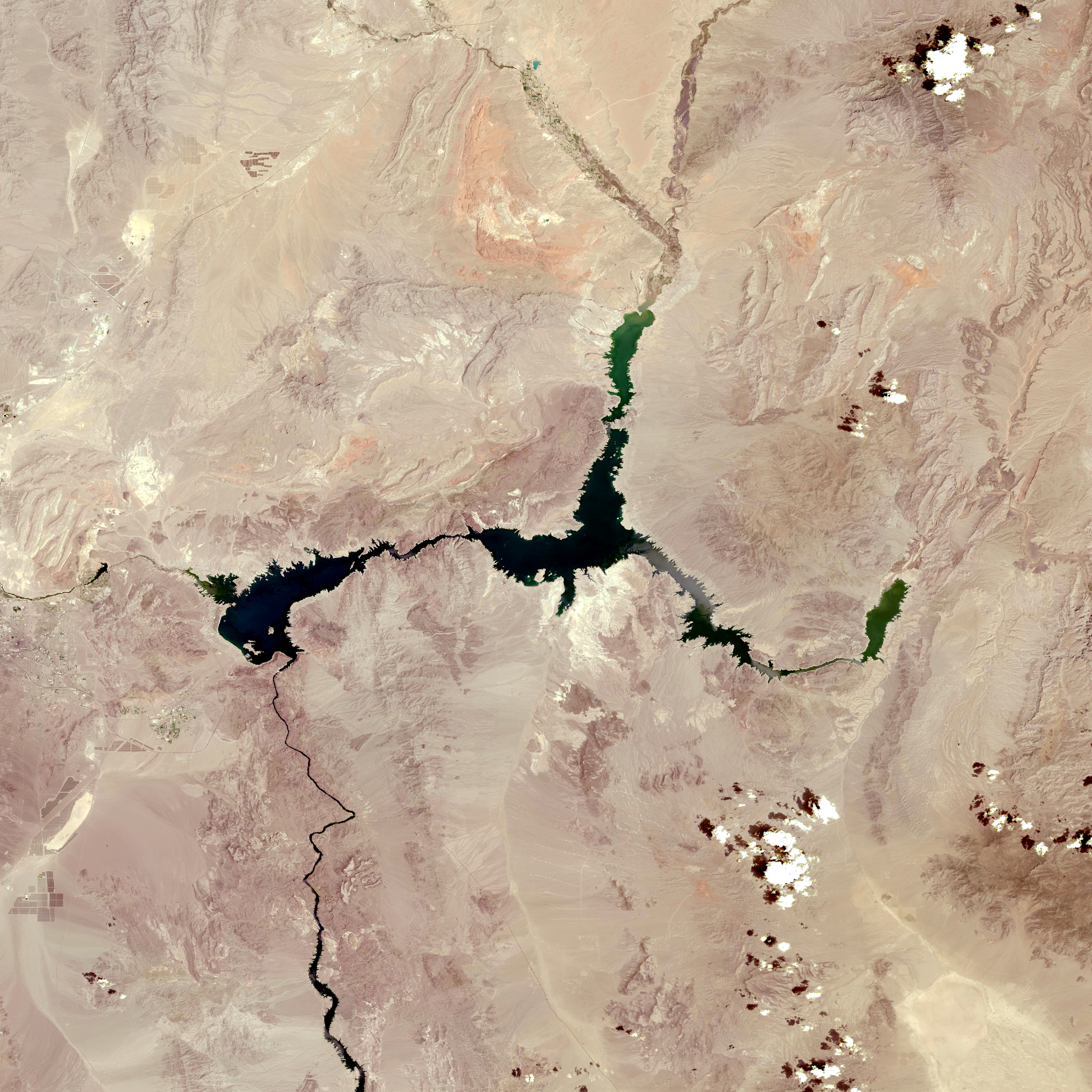
At its maximum capacity, Lake Mead can hold 28.23 million acre-feet (34.82 km3) of water, covering a surface area of 247 square miles (640 km2) and reaching a maximum depth of 532 feet (162 m). The full pool elevation is 1,229 feet (375 m) above sea level. However, since 1983, the lake has largely remained below this mark. By May 31, 2022, its storage had plummeted to just 7.517 million acre-feet, representing a mere 26.63% of full capacity. This dramatic decline means the lake's surface elevation had dropped to approximately 1,042 feet, a staggering 187 feet below full pool, impacting its ability to deliver water and generate power.
👥 Key People & Organizations
The Bureau of Reclamation, a federal agency within the U.S. Department of the Interior, plays a pivotal role in managing Lake Mead and the Hoover Dam. Its commissioners, like Dr. Elwood Mead for whom the lake is named, have historically shaped its operational policies. The Colorado River Commission of Nevada and its counterparts in Arizona and California are key state-level entities that negotiate water allocations and management strategies. Major water providers such as the Metropolitan Water District of Southern California and the Southern Nevada Water Authority are critical stakeholders, representing the millions of people who rely on the lake's water.
🌍 Cultural Impact & Influence
Beyond its utilitarian function, Lake Mead has become a potent symbol of the American West's arid landscape and the complex challenges of water management. It has inspired countless photographs, documentaries, and artistic interpretations, often highlighting its dramatic scale and, more recently, its alarming decline. The lake's recreational opportunities, including boating and fishing, attract millions of visitors annually, contributing significantly to the local economies of Boulder City, Nevada, and Lake Havasu City, Arizona. The visual spectacle of the 'bathtub rings'—the stark, white mineral deposits left on canyon walls as water levels recede—has become an iconic, albeit concerning, image of climate change impacts.
⚡ Current State & Latest Developments
The most pressing development for Lake Mead is its ongoing and severe drought. Since 2000, the reservoir has experienced a sustained period of decline, exacerbated by below-average precipitation and increased evaporation rates attributed to rising global temperatures. In 2021, Lake Mead dropped below the elevation of Hoover Dam's primary spillway, necessitating operational changes and triggering mandatory water use cutbacks for Arizona and Nevada under the Colorado River Compact's drought contingency plans. The situation remains critical in 2024, with projections indicating further declines unless significant precipitation occurs.
🤔 Controversies & Debates
The most significant controversy surrounding Lake Mead revolves around the equitable distribution of its dwindling water resources. The Colorado River Compact and subsequent agreements, established decades ago, are now being tested by the harsh realities of climate change and population growth. Debates rage over whether the existing allocation framework is sustainable, with some states and stakeholders advocating for renegotiation or more aggressive conservation measures. The role of hydroelectric power generation at Hoover Dam is also a point of contention, as lower water levels reduce the dam's generating capacity and revenue, impacting regional energy supply and infrastructure maintenance.
🔮 Future Outlook & Predictions
The future outlook for Lake Mead is precarious, heavily dependent on climatic conditions and inter-state cooperation. Scientists and policymakers are exploring various strategies, including further reductions in water use, investments in water recycling and desalination technologies, and potential modifications to dam operations. The long-term viability of supplying water to the millions who depend on the Colorado River Basin hinges on a delicate balance between conservation, innovation, and potentially difficult political compromises. Projections suggest that without substantial intervention, the reservoir could reach 'dead pool'—a level too low to release water through the dam's outlets—within the next decade, a scenario with catastrophic implications for the region.
💡 Practical Applications
Lake Mead's primary practical application is as a colossal municipal and agricultural water supply for the Southwestern United States. It provides drinking water for major metropolitan areas like Las Vegas, Phoenix, and Los Angeles, supporting a population of nearly 20 million people. Furthermore, its waters are essential for irrigating millions of acres of farmland, particularly in California's Imperial Valley and Arizona's Central Arizona Project, sustaining vital agricultural economies. The Hoover Dam, powered by Lake Mead's water, also generates significant amounts of hydroelectric power, supplying electricity to Nevada, Arizona, and California.
Key Facts
- Category
- nature
- Type
- place