
Contents
- 🎨 What Are Pigments?
- 📜 A Brief History of Pigments
- 🔬 The Science Behind Color
- 🌟 Notable Pigments and Their Origins
- 🎨 Pigments vs. Dyes: Understanding the Difference
- 🌿 Biological Pigments in Nature
- 💡 Choosing the Right Pigment for Your Project
- 🛒 Where to Find Quality Pigments
- Frequently Asked Questions
- Related Topics
Overview
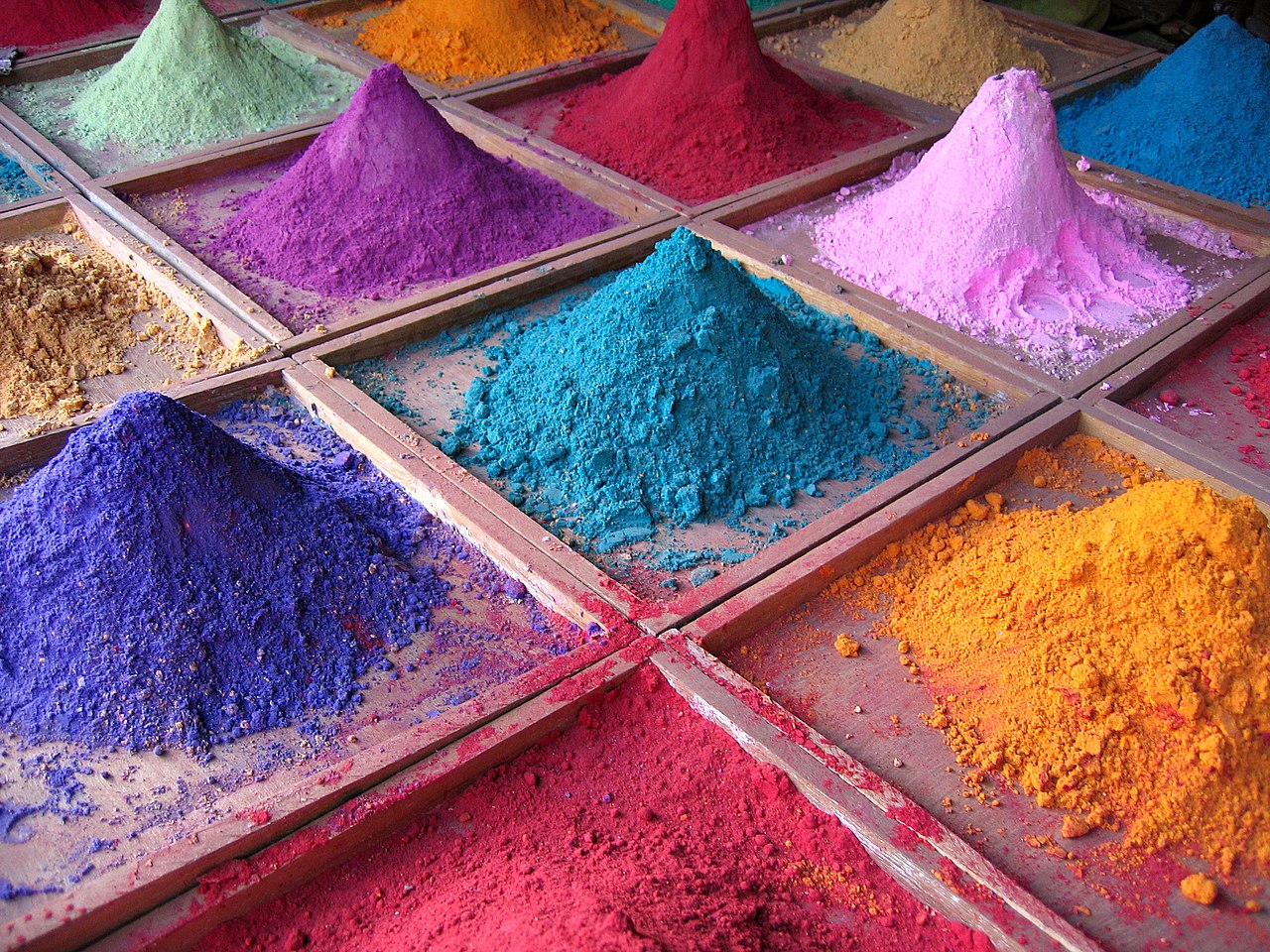
Pigments are the fundamental materials that impart color to paints, inks, plastics, and countless other substances. Unlike dyes, which dissolve in their medium, pigments are insoluble particles suspended within it. Their history stretches back to prehistoric cave paintings, utilizing ochres and charcoal, evolving through mineral extraction, and now encompassing sophisticated synthetic compounds. The choice of pigment dramatically affects a material's hue, opacity, lightfastness, and chemical stability, making their understanding crucial for artists, manufacturers, and conservators alike. Debates often arise concerning the toxicity of certain historical pigments versus the vibrancy and permanence of modern alternatives.
🎨 What Are Pigments?
Pigments are the fundamental building blocks of color, acting as insoluble particles that impart hue to various materials. Unlike dyes, which dissolve in a medium, pigments remain suspended, providing opacity and lightfastness. This insolubility is key to their application in paints, inks, plastics, and even cosmetics, ensuring color stability and durability. The choice of pigment profoundly impacts the final appearance, texture, and longevity of a colored product, making their selection a critical step in many creative and industrial processes.
📜 A Brief History of Pigments
The human fascination with color is ancient, with pigments forming the bedrock of early artistic expression. Prehistoric cave paintings, such as those found in Lascaux, France, dating back over 17,000 years, utilized naturally occurring pigments like ochres (iron oxides) and charcoal for their striking visual effects. The discovery and trade of rare pigments, like the vibrant blue derived from lapis lazuli, shaped economies and art movements for millennia, demonstrating their immense historical and cultural value.
🔬 The Science Behind Color
The science of pigments is rooted in how they interact with light. Pigments absorb certain wavelengths of light and reflect others; the reflected wavelengths are what we perceive as color. This selective absorption is due to the pigment's chemical structure, particularly the arrangement of electrons within its molecules. Inorganic pigments, often metal oxides or sulfides, tend to be more stable and lightfast than many organic pigments, which can be susceptible to fading over time when exposed to UV radiation or chemical agents.
🌟 Notable Pigments and Their Origins
Throughout history, specific pigments have become synonymous with artistic periods and cultural significance. Ochre, one of the oldest known pigments, provided earthy reds, yellows, and browns for early human art. Lapis lazuli, a semi-precious stone, yielded an intense ultramarine blue highly prized in Renaissance painting, often costing more than gold. Ivory black, derived from charred animal bones, offered a deep, matte black essential for drawing and painting.
🎨 Pigments vs. Dyes: Understanding the Difference
A crucial distinction in the world of colorants is between pigments and dyes. While both provide color, their solubility is the defining factor. Dyes are soluble and chemically bond with the substrate, often used for textiles. Pigments, conversely, are insoluble particles dispersed within a binder, such as oil in oil paints or acrylic polymer in acrylics. This difference dictates their application: dyes penetrate and stain, while pigments sit on the surface, providing coverage and opacity.
🌿 Biological Pigments in Nature
Nature itself is a master of pigment creation, producing a dazzling array of colors through biological pigments. These compounds, synthesized by living organisms, are responsible for the vibrant hues of flowers, the camouflage of animals, and the rich colors of fruits and vegetables. Examples include chlorophyll in plants (green), carotenoids in carrots and flamingos (oranges and reds), and melanin in human skin and hair (browns and blacks).
💡 Choosing the Right Pigment for Your Project
Selecting the appropriate pigment involves considering several factors beyond just color. Lightfastness, or resistance to fading from light exposure, is paramount for artworks intended to last. Opacity, the ability to cover underlying layers, is crucial for certain painting techniques. Chemical inertness ensures the pigment won't react with other materials in the artwork or its environment. For practical applications like inks or plastics, considerations like particle size, dispersibility, and cost also play significant roles.
🛒 Where to Find Quality Pigments
Acquiring high-quality pigments is essential for achieving professional results, whether you're an artist, conservator, or manufacturer. Reputable art supply stores and specialized chemical suppliers are the primary sources. Look for suppliers that provide detailed specifications for their pigments, including lightfastness ratings, chemical composition, and particle size. Online retailers offer a vast selection, but it's wise to purchase from established vendors with good return policies and customer reviews to ensure authenticity and quality.
Key Facts
- Year
- c. 40,000 BCE
- Origin
- Prehistoric Cave Paintings
- Category
- Art & Science
- Type
- Topic
Frequently Asked Questions
Are all pigments inorganic?
No, while many traditional and highly stable pigments are inorganic (like ochre and titanium dioxide), there are also organic pigments. Organic pigments, derived from carbon-based compounds, can offer very bright and intense colors, but some may be less lightfast or durable than their inorganic counterparts. The distinction is more about their chemical structure and solubility than their origin.
What is the difference between a pigment and a colorant?
The term 'colorant' is broader and encompasses both pigments and dyes. A colorant is any substance that imparts color. Pigments are a specific type of colorant that is insoluble in the medium it's applied to, while dyes are soluble. So, all pigments are colorants, but not all colorants are pigments.
How do I test the lightfastness of a pigment?
Professional lightfastness is typically tested using standardized methods that expose pigment samples to controlled light sources for extended periods, often simulating years of exposure. For artists, manufacturers usually provide lightfastness ratings (e.g., ASTM ratings I or II for excellent permanence). You can also perform your own informal tests by exposing small painted swatches to direct sunlight over several weeks or months and comparing them to a protected swatch.
Can pigments be toxic?
Some historical pigments contained toxic heavy metals, such as lead white (lead carbonate) and vermilion (mercuric sulfide). While many of these have been replaced by safer alternatives, caution is still advised when handling any raw pigment powder. Always use appropriate personal protective equipment like gloves and a mask, work in a well-ventilated area, and avoid ingestion or prolonged skin contact. Always check the safety data sheet (SDS) for specific pigment information.
What is the most expensive pigment?
Historically, ultramarine blue, derived from lapis lazuli, was often more valuable than gold due to the rarity of the stone and the difficulty of extraction. While synthetic ultramarine is now common and affordable, true natural ultramarine remains exceptionally rare and commands very high prices. Other rare pigments, like carmine derived from cochineal insects, can also be quite costly.
How are pigments made?
The production methods vary greatly depending on whether the pigment is organic or inorganic. Inorganic pigments are often synthesized through chemical reactions involving metal salts, oxides, or sulfides, followed by processes like precipitation, calcination, and milling to achieve the desired particle size and properties. Organic pigments are typically synthesized through complex chemical reactions involving aromatic compounds, often requiring multiple steps and purification processes.