
Contents
- 🎵 Origins & History
- ⚙️ How It Works
- 📊 Key Facts & Numbers
- 👥 Key People & Organizations
- 🌍 Cultural Impact & Influence
- ⚡ Current State & Latest Developments
- 🤔 Controversies & Debates
- 🔮 Future Outlook & Predictions
- 💡 Practical Applications
- 📚 Related Topics & Deeper Reading
- Frequently Asked Questions
- References
- Related Topics
Overview
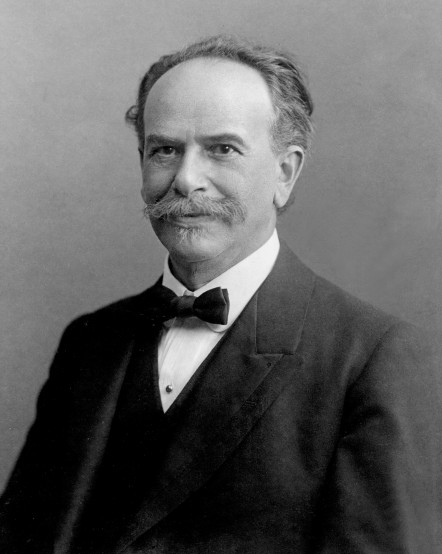
Franz Uri Boas (1858-1942) was a pioneering German-American anthropologist whose work laid the foundation for modern anthropology. Often referred to as the 'Father of American Anthropology', Boas championed the principles of cultural relativism and historical particularism, challenging the prevailing notions of racial superiority in his time. His extensive fieldwork among the indigenous cultures of the Pacific Northwest provided critical insights into the diversity of human societies. Boas's academic influence extended through his role as a professor at Columbia University, where he mentored a generation of anthropologists who would shape the discipline. His legacy continues to resonate in contemporary discussions about culture and identity.
🎵 Origins & History
Franz Boas began his career as a curator at the Smithsonian Institution. His early interest in geography led him to participate in a geographical expedition to northern Canada, where he encountered the Inuit culture, sparking his lifelong passion for anthropology. By 1899, he had become a professor of anthropology at Columbia University, a position he held until his death in 1942. His foundational work established anthropology as a respected academic discipline in the U.S.
⚙️ How It Works
Boas's approach to anthropology emphasized the importance of understanding cultures within their own contexts, a principle known as cultural relativism. He argued that no culture is superior to another, and that each should be studied on its own terms. This contrasted sharply with the ethnocentric views prevalent during his time. Boas employed rigorous scientific methods in his research, including participant observation and detailed field notes, which became standard practices in anthropology. His work with the Native American tribes of the Pacific Northwest showcased his commitment to documenting and preserving indigenous cultures. Boas's influence can be seen in the methodologies adopted by his students, who would later lead their own anthropological research.
📊 Key Facts & Numbers
Key facts about Franz Boas include his birth on July 9, 1858, and his death on December 21, 1942. He was a prominent figure in the establishment of anthropology as a scientific discipline in the United States. Boas taught at Columbia University for over four decades and mentored many influential anthropologists, including Ruth Benedict and Margaret Mead. Boas was also the first president of the Linguistic Society of America, highlighting his contributions to linguistics alongside anthropology.
👥 Key People & Organizations
Franz Boas's legacy is carried on by numerous organizations and institutions that continue to promote anthropological research and education. The American Anthropological Association recognizes his contributions through various awards and honors. His students and their students have established anthropology departments across the globe, ensuring that Boas's principles of cultural relativism and historical particularism remain integral to the field. The ongoing relevance of his work is evident in contemporary anthropological studies that challenge cultural stereotypes and promote understanding of diverse societies.
🌍 Cultural Impact & Influence
Discussions around Boas's work are increasingly relevant in the context of global cultural dynamics and debates surrounding identity politics. His emphasis on cultural relativism is echoed in current anthropological discourse, particularly in the study of globalization and multiculturalism. Recent publications and conferences continue to explore Boas's methodologies and their applicability to modern issues, such as migration and cultural preservation. The ongoing interest in his theories indicates a sustained engagement with his ideas in both academic and public spheres.
⚡ Current State & Latest Developments
Controversies surrounding Boas's work often focus on the implications of cultural relativism. Critics argue that while his approach promotes understanding, it may also lead to moral relativism, where harmful practices are excused in the name of cultural respect. Supporters counter that Boas's work encourages critical examination of cultural practices without imposing external values. The debates around his legacy reflect broader tensions in anthropology regarding ethics, representation, and the role of the anthropologist in society.
🤔 Controversies & Debates
Looking ahead, the future of Boas's influence in anthropology appears robust. As global challenges such as climate change and social inequality become increasingly pressing, the need for culturally informed approaches to these issues will likely grow. Boas's methodologies, emphasizing the importance of context and cultural understanding, will remain vital for anthropologists addressing contemporary problems. The continued exploration of his ideas may lead to new frameworks for understanding cultural interactions in an interconnected world.
🔮 Future Outlook & Predictions
Practical applications of Boas's theories can be seen in various fields, including education, public policy, and cultural heritage preservation. His emphasis on understanding cultural contexts informs educational practices that aim to promote inclusivity and respect for diversity. In public policy, his work encourages the consideration of cultural factors in decision-making processes, particularly in areas affecting indigenous communities. Additionally, his methodologies are employed in cultural heritage projects that seek to document and preserve the traditions of marginalized groups.
💡 Practical Applications
Related topics that expand on Boas's contributions include the study of cultural relativism, the impact of historical particularism, and the evolution of anthropological methods. Further reading can explore the works of his students, such as Ruth Benedict and Margaret Mead, who built upon his foundational theories. Additionally, examining contemporary anthropological debates can provide insight into how Boas's legacy continues to shape the discipline.
Key Facts
- Year
- 1942
- Origin
- Minden, Germany
- Category
- history
- Type
- person
Frequently Asked Questions
What are Franz Boas's main contributions to anthropology?
Franz Boas is best known for introducing the principles of cultural relativism and historical particularism, which emphasize understanding cultures within their own contexts. His extensive fieldwork among indigenous populations, particularly in the Pacific Northwest, provided critical insights into cultural diversity. Boas's methodologies, including participant observation, have become foundational in anthropological research.