
Contents
- 🌈 What is the Visible Light Spectrum?
- 💡 The Colors of the Rainbow: Wavelengths and Perception
- 🔬 How We See Light: The Science of Vision
- 🌌 Beyond Visible: Ultraviolet and Infrared
- ⚡ Electromagnetic Spectrum: The Bigger Picture
- 🎨 Applications of Visible Light
- 🤔 Debates in Optical Science
- 🚀 The Future of Light Research
- Frequently Asked Questions
- Related Topics
Overview
The visible light spectrum encompasses the range of electromagnetic radiation that can be detected by the human eye, typically from about 380 nm to 750 nm in wavelength. This spectrum includes all the colors that we perceive, from violet to red, and is crucial for various applications, including art, design, and technology. The visible spectrum is not only a scientific concept but also influences cultural practices, such as color symbolism and lighting design. As technology advances, our understanding and manipulation of visible light continue to evolve, impacting everything from photography to virtual reality experiences.
🌈 What is the Visible Light Spectrum?
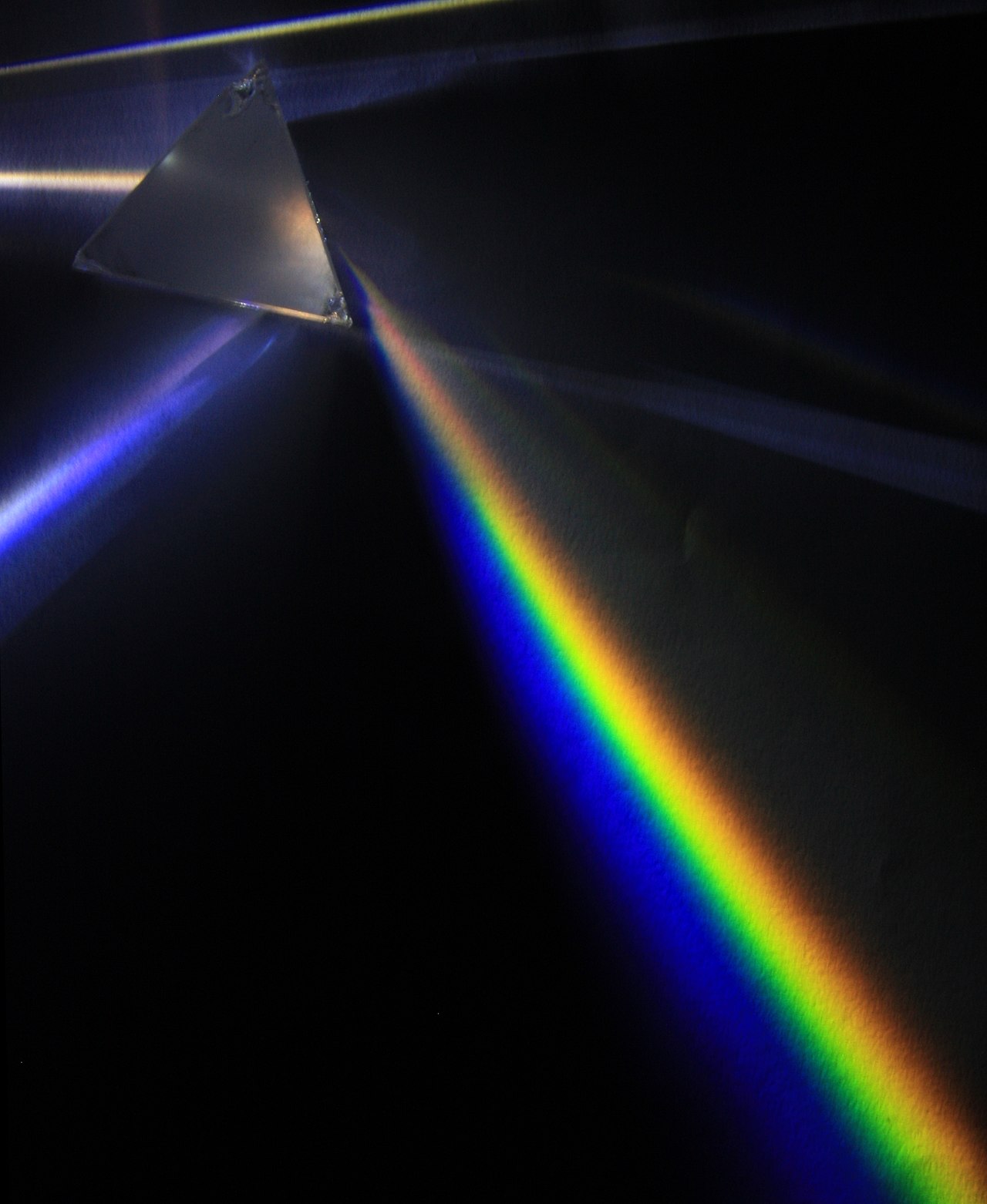
The visible light spectrum is the narrow band of electromagnetic radiation that human eyes can detect. It's the portion of the spectrum responsible for our perception of color and brightness. Think of it as the universe's built-in color palette, ranging from deep violets to fiery reds. This specific range is crucial for everything from navigating our environment to appreciating art and nature. Without it, our world would be a monochrome existence, devoid of the vibrant hues we often take for granted.
💡 The Colors of the Rainbow: Wavelengths and Perception
Within the visible spectrum, different wavelengths correspond to different colors. The longest wavelengths, around 700 nanometers (nm), appear as red, while the shortest, near 400 nm, are perceived as violet. Arranged in order, these colors form the familiar rainbow: red, orange, yellow, green, blue, indigo, and violet (ROYGBIV). Each color is essentially a specific energy level of light, and our eyes are finely tuned to interpret these variations. Understanding these wavelengths is fundamental to fields like color theory and optical physics.
🔬 How We See Light: The Science of Vision
Our ability to see the visible light spectrum relies on complex biological machinery. Light enters the eye through the cornea and pupil, then is focused by the lens onto the retina at the back of the eye. Here, specialized cells called photoreceptors—rods and cones—convert light energy into electrical signals. Cones are responsible for color vision, with different types sensitive to red, green, and blue wavelengths. These signals are then transmitted to the brain via the optic nerve, where they are interpreted as images and colors.
🌌 Beyond Visible: Ultraviolet and Infrared
While the visible spectrum is what we see, it's just a small part of a much larger phenomenon. Immediately beyond violet lies ultraviolet (UV) radiation, with shorter wavelengths and higher energy, invisible to us but detectable by some insects and capable of causing sunburn. Beyond red, with longer wavelengths and lower energy, is infrared (IR) radiation, felt as heat and used in technologies like thermal imaging and remote controls. The distinction between visible and non-visible light is a matter of biological perception, not a fundamental physical boundary.
⚡ Electromagnetic Spectrum: The Bigger Picture
The visible light spectrum is a segment of the broader electromagnetic spectrum, which encompasses all forms of electromagnetic radiation. This spectrum includes radio waves, microwaves, infrared, visible light, ultraviolet, X-rays, and gamma rays, ordered by their wavelength and frequency. Each type of radiation carries energy and travels at the speed of light. Understanding the electromagnetic spectrum is key to comprehending phenomena from radio astronomy to medical imaging.
🎨 Applications of Visible Light
Visible light has myriad practical applications across various industries. In photography and videography, understanding light and color is paramount for capturing images. The LED industry relies on precise control of emitted wavelengths for lighting and display technologies. Optics engineers design lenses and systems for everything from telescopes to microscopes, manipulating visible light to reveal the unseen. Even in agriculture, specific wavelengths of light are used to optimize plant growth.
🤔 Debates in Optical Science
One ongoing discussion in optical science revolves around the precise definition of the optical spectrum. While many consider it synonymous with the visible spectrum, some researchers use 'optical spectrum' more broadly to include adjacent ultraviolet and infrared ranges, collectively termed optical radiation. This definitional nuance impacts how research is categorized and how technologies are described, particularly in fields like spectroscopy and optical engineering.
🚀 The Future of Light Research
The future of visible light research promises exciting advancements. Scientists are exploring new ways to generate and manipulate light, leading to innovations in quantum computing and holography. The development of novel materials that interact with light in unique ways could revolutionize displays, energy harvesting, and even camouflage technologies. As our understanding of light deepens, so too will our ability to harness its power for unprecedented applications.
Key Facts
- Year
- 2023
- Origin
- Electromagnetic Theory
- Category
- Science
- Type
- Concept
Frequently Asked Questions
What are the main colors in the visible light spectrum?
The main colors, often remembered by the acronym ROYGBIV, are Red, Orange, Yellow, Green, Blue, Indigo, and Violet. Each color corresponds to a specific range of wavelengths within the visible light spectrum, with red having the longest wavelengths and violet the shortest.
How is the visible light spectrum different from the electromagnetic spectrum?
The visible light spectrum is a small portion of the much larger electromagnetic spectrum. The electromagnetic spectrum includes all forms of radiation, such as radio waves, microwaves, infrared, ultraviolet, X-rays, and gamma rays, in addition to visible light.
What determines the color of an object?
The color of an object is determined by which wavelengths of visible light it absorbs and which it reflects. For example, a red apple appears red because its surface absorbs most wavelengths of visible light but reflects red wavelengths.
Can animals see the same visible light spectrum as humans?
No, not all animals see the same visible light spectrum. Some animals, like bees, can see into the ultraviolet range, while others, like snakes, can detect infrared radiation. This allows them to perceive their environment in ways humans cannot.
What is the unit of measurement for wavelengths in the visible light spectrum?
Wavelengths in the visible light spectrum are typically measured in nanometers (nm). One nanometer is one billionth of a meter. The visible spectrum ranges roughly from 400 nm (violet) to 700 nm (red).
How does light interact with matter to create different colors?
Light interacts with matter through processes like absorption, reflection, transmission, and scattering. When white light, which contains all visible wavelengths, hits an object, the object's material properties determine which wavelengths are absorbed and which are reflected or transmitted, thus defining its perceived color.